
Robbery Bob - King of Sneak
Deca_GamesAction
4.410.55K Reviews
- Version
- 1.36.2
- Installs
- 100.00M
- Age Rating
- Everyone 10+
Screenshots
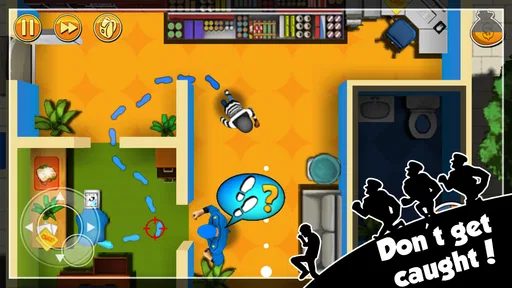
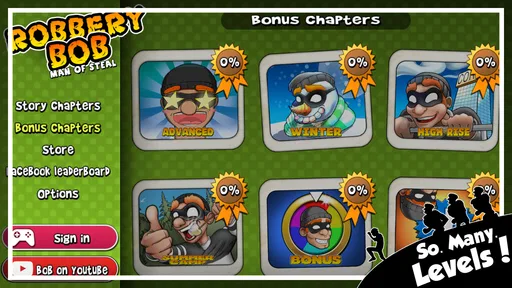
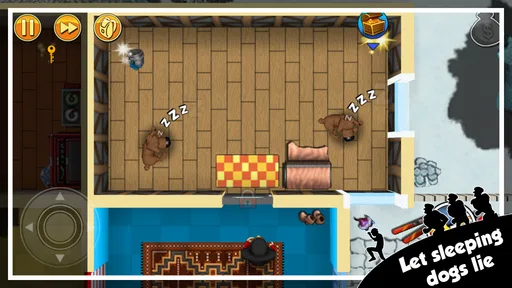
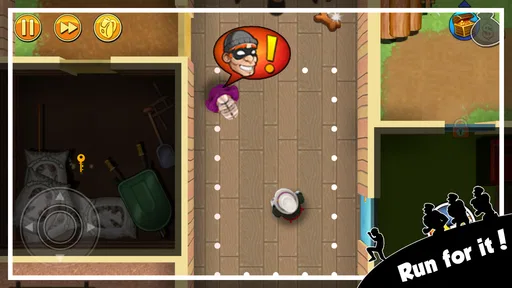
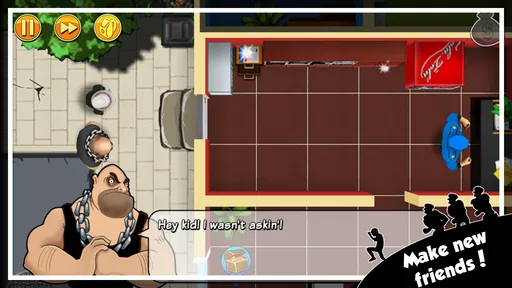
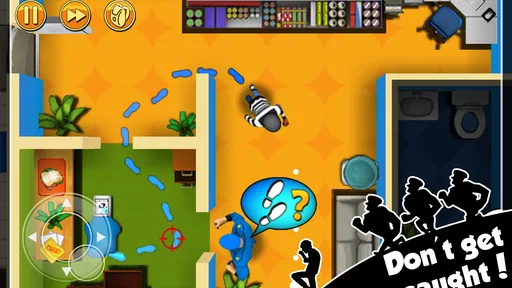
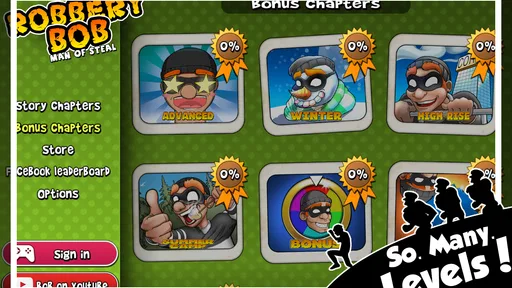
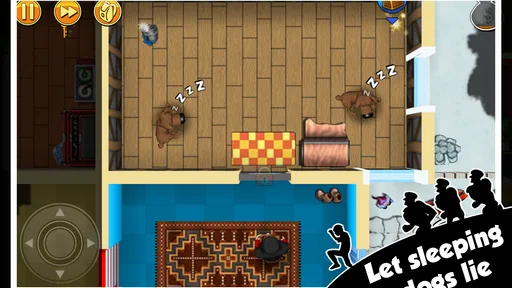
Our Review of Robbery Bob - King of Sneak
 Analysis by Appyee
I spent time with Robbery Bob - King of Sneak expecting a simple action game, but its best moments come from patience rather than speed. You guide Bob through guarded locations, look for openings, collect valuables, and try to leave without turning a careful robbery into a frantic escape. That combination makes it easy to understand in a few minutes, yet surprisingly demanding when a level’s layout, patrols, and timing begin working against you.
This is a free action game from Deca_Games, available for players aged Everyone 10+. It has been around since October 24, 2015, and its audience has grown to more than one hundred million installs. Those figures suggest a very accessible design, but they do not mean it is a mindless pick-up-and-play experience. The controls are approachable; the decisions are where the challenge lives.
How the sneaking feels in everyday play
The basic appeal is clear: Bob wants the loot, while the environment wants him caught. I found myself constantly switching between two instincts. One is to move quickly before a guard or obstacle changes position. The other is to stop, watch, and wait for a safer route. The game is most enjoyable when I resisted the urge to rush.
That makes the perceived speed feel deliberately uneven. Bob can move through a space briskly when the route is open, but progress slows whenever I need to study a patrol or line up a safe passage. This is not a weakness by itself. The pauses give the action its tension, and they prevent every stage from becoming a race toward the nearest object.
For a short session, that rhythm works well. I can play a few stages while waiting for a bus or taking a break, then stop without needing a long uninterrupted commitment. The individual objectives are easy to grasp, so I do not spend the first part of a session remembering complicated systems. The game gets me into the decision-making quickly.
The trade-off is that players looking for nonstop action may find the stealth sections slow. This is closer to a light puzzle adventure with comic robbery scenes than to a traditional reflex-heavy action game. If you prefer constant combat, rapid movement, or large-scale battles, the deliberate pacing may feel restrictive rather than clever.
Why speed is not always the best strategy
One useful habit is to treat each room as a small observation problem. Before moving Bob, I look for the safest direction and ask what will happen if I am forced to turn around. A route that is slightly longer can be better than a direct path if it leaves room to recover from a mistake. That is one of the game’s less obvious strengths: it rewards planning without making the controls intimidating.
I also learned not to measure success only by how quickly I reach the exit. A fast attempt can become inefficient if I repeatedly trigger suspicion and restart the same section. Moving cautiously at the beginning often saves time later because I understand the space before committing to a risky shortcut.
This is especially useful in an everyday scenario such as playing with one hand during a short break. I can make progress without memorizing a long control scheme, but I still need enough attention to read the situation. It is casual in accessibility, not necessarily casual in every decision.
What happens during heavier play
The most demanding moments are not necessarily the moments with the most visual activity. A crowded area, several possible routes, or a sequence that requires quick correction puts more pressure on my attention than a quiet corridor. The challenge comes from combining movement with awareness, so a player can feel overloaded even when the screen itself remains easy to read.
On a longer session, repetition becomes the main source of friction. When I fail after reaching the end of a carefully planned route, I want the next attempt to feel immediate. The game’s compact structure supports retries, but repeating familiar steps can still wear down patience. It is better suited to focused bursts than to marathon play every day.
That distinction matters for device expectations. I would not choose this as a showcase for demanding graphics or as a game designed around extended high-intensity sessions. Its appeal is the interaction between movement, stealth, and timing. A phone that handles ordinary mobile games comfortably should be a sensible match, while players with older or more limited hardware should keep their expectations realistic and close other demanding apps before playing.
I am careful not to treat the large install audience as proof that every device will behave identically. Phones differ in age, available storage, background activity, and operating-system condition. The current version is 1.36.2 and requires Android 7.0 or later, so compatibility starts with checking that basic requirement. On iOS or Android, the practical experience can still vary with the device itself.
Stability and recovering from mistakes
What I value most in this kind of game is a forgiving recovery loop. Stealth games become frustrating when one small error forces a long, tedious restart. Here, the central design encourages learning through attempts: I can identify the decision that went wrong, adjust my route, and try again with a clearer plan.
That does not make failure painless. If I repeatedly choose an aggressive route, the game will not rescue me from poor judgment. The useful recovery is mental rather than automatic: observe what exposed Bob, remember the timing, and change one part of the approach instead of improvising everything again.
For reliability, I would judge the experience mainly by whether the player’s own attention remains consistent. The game’s straightforward premise makes it easy to return after a break, and I do not need to relearn a complicated story before continuing. That helps it work as a dependable pick for short sessions, provided the device meets the operating-system requirement and has enough general headroom for normal game use.
I also prefer this structure to games that bury a simple idea under multiple menus. Robbery Bob keeps the reason for playing obvious: enter, steal, avoid trouble, and get out. That clarity reduces the chance that a brief session turns into account management or endless preparation. The focus stays on the next move.
Resource expectations and device limits
The game’s visual identity is playful rather than technically extravagant. That makes it easier to recommend to someone who wants a recognizable action game without treating their phone like a console. Still, “light” should not be confused with universally effortless. Older phones can struggle with many games for reasons unrelated to graphical ambition, especially when storage is tight or other apps are active.
My practical advice is simple: update the operating system when possible, close unusually demanding background apps, and avoid judging performance during the first seconds after launching. If the phone already feels slow in ordinary use, a game built around quick reactions may feel less comfortable even when the game itself is not especially demanding.
Battery expectations also depend on how long you play and what else the phone is doing. I would use it as a compact session game rather than assume it belongs in the same category as a large, visually intensive action title. That is a benefit for many players, but it also means the experience may feel modest if they want a technically spectacular presentation.
The free price lowers the barrier to trying it, though optional in-app purchases range from $0.99 to $8.49 per item. I would begin without spending anything and decide whether the core loop suits me first. The presence of purchases is worth remembering for younger players, even with the Everyone 10+ content rating. Anyone sharing a device should review the purchase settings before handing it over.
Where it stands beside other mobile action games
Compared with a combat-focused action game, this one asks more of my observation than my aiming. Compared with a pure puzzle game, it gives me more movement and a stronger sense of risk. That middle ground is its identity. I get the satisfaction of solving a route, but I also feel pressure because Bob is not simply selecting answers from a menu.
It is also less demanding to learn than many stealth games built around elaborate equipment, skill trees, or complex mission planning. That accessibility is valuable for someone who wants stealth flavor without committing to a large system. The downside is that experienced stealth players may eventually want deeper tools or more varied consequences than this lighter format offers.
I would choose it over a typical endless runner when I want decisions to matter more than reflex repetition. I would choose a conventional puzzle title instead when I want a completely calm experience with no pressure from being spotted. The right comparison depends on my mood: this game sits between those extremes, offering compact tension without becoming a full-scale tactical simulator.
Who will enjoy it most
I think it is a strong match for players who like comic crime themes, short action sessions, and puzzles that are solved through movement. It is particularly approachable for someone who normally avoids stealth games because the controls and objective are easy to understand. The game gives enough room to experiment without requiring a detailed explanation before the first attempt.
It is less suitable for anyone who dislikes repeating a route after a mistake. It may also disappoint players searching for a deep narrative, competitive multiplayer focus, or a visually demanding blockbuster. The free entry point makes trying it easy, but the long-term appeal depends on whether sneaking through similar situations remains satisfying for that player.
The average rating is 4.4 from about 1.7 million ratings, with roughly 11 thousand written reviews. I read that broad response as evidence of strong mainstream appeal, not as a guarantee that every player will enjoy the pacing. The same simple structure that makes the game welcoming can feel limited to someone who wants more complexity.
Small habits that improve the experience
My first tip is to plan an exit before taking the obvious reward. Players naturally focus on the nearest loot, but the safest route back may be more important than the first object in front of Bob. Looking beyond the immediate target reduces panic and makes the level feel less like a series of isolated reactions.
My second tip is to change one decision at a time after a failed attempt. If I alter the entire route, I cannot tell what actually caused the problem. Keeping most of the plan intact while testing a different turn or pause turns failure into useful information instead of simple repetition.
My third tip is to use short sessions when frustration starts replacing concentration. The game’s stealth rhythm depends on noticing details, and tired play encourages impatient movement. Stopping after a few failed attempts can be more productive than forcing a long session and blaming the controls for decisions I made too quickly.
A fourth practical point concerns spending. Since the game is free and includes optional purchases, I would treat any purchase as a convenience rather than part of the reason to install it. First check whether the basic sneaking loop remains enjoyable on its own. That approach keeps the decision about money separate from the excitement of the first few stages.
My performance verdict
Robbery Bob - King of Sneak feels fast enough when the route is clear, stable in concept, and modest in its demands compared with more ambitious mobile action games. Its heavier moments come from concentration, repeated attempts, and the pressure of making a clean escape rather than from spectacle. That makes it a practical choice for short play, especially on a device running Android 7.0 or newer.
Deca_Games has built an action game that is easy to start but not entirely mindless. I enjoy the way it turns ordinary movement into a small tactical decision, and I appreciate that mistakes teach me something about the space. The main limitation is variety of depth: players who want a large, constantly evolving system may outgrow its lighter approach.
My recommendation is straightforward. Try it if you want a free stealth-flavored action game that fits naturally into short breaks and rewards patience. Skip it if you need continuous combat, advanced simulation, or a completely relaxed puzzle experience. For everyone in between, this is a well-balanced little robbery adventure: approachable on the surface, more thoughtful in motion, and at its best when I stop rushing and let the plan do the work.
Verdict
Strengths of Robbery Bob - King of Sneak
- Simple controls make sneaking accessible for casual players.
- Many levels offer different layouts, objectives, and guard patterns.
- Funny animations and dialogue give the game a lighthearted tone.
- Collectibles and bonus objectives add extra reasons to replay stages.
- Works well for short gaming sessions on mobile devices.
Limitations of Robbery Bob - King of Sneak
- Some later levels can feel repetitive once guard patterns become familiar.
- Optional rewards may encourage repeated attempts or extra grinding.
- Mistakes can be frustrating when a long stealth section must be replayed.
- Visual details can be difficult to see on smaller phone screens.
- The game may feel dated compared with newer stealth titles.
Other Releases by Deca_Games
View All
Robbery Bob 2: Double Trouble
Action4.3
Similar Picks in This Category
View All
Temple Run 2: Endless Escape
Imangi Studios4.1

PUBG MOBILE
Level Infinite4.3

Free Fire: 9th Anniversary
GARENA INTERNATIONAL I4.4

Talking Tom: Hero Dash Run
Outfit7 Limited4.3

slither.io
Lowtech Studios3.9

Sniper 3D:Gun Shooting Games
Wildlife Studios4.6
Frequently Asked Questions
What is Robbery Bob - King of Sneak about?
Robbery Bob - King of Sneak is a stealth-based action game in which you guide Bob through houses, shops, and other locations while he attempts to steal valuable items without being caught. Each level encourages careful movement, timing, and observation. You must avoid guards, residents, security systems, and other obstacles while completing objectives and finding a safe route to the exit.
Is Robbery Bob - King of Sneak free to download and play?
The game can generally be downloaded for free on supported Android and iOS devices, although availability and pricing may vary by region and store. Free gameplay may include advertisements or optional in-app purchases, depending on the version installed. Before downloading, check the current store listing for details about ads, purchases, device compatibility, and any edition-specific requirements.
Does the game require an internet connection?
Robbery Bob - King of Sneak is primarily designed as a single-player experience, so many levels can usually be enjoyed without a continuous internet connection. However, an internet connection may be needed for downloading the game, displaying advertisements, restoring purchases, receiving updates, or accessing certain online features. Offline behavior can differ between versions and devices.
Is Robbery Bob - King of Sneak suitable for children?
The game uses cartoon-style visuals and humorous situations rather than realistic violence, making it approachable for many younger players. Nevertheless, it revolves around sneaking and stealing, and some levels involve being chased or caught by characters. Parents should review the age rating, advertising, and in-app purchase settings on the relevant app store before allowing children to play.
What devices are compatible with Robbery Bob - King of Sneak?
Compatibility depends on the operating system version, device hardware, and the edition currently offered in the Google Play Store or Apple App Store. The game is built for mobile play and generally works best on reasonably modern smartphones and tablets with sufficient storage. Check the official store page on your device for the latest supported Android or iOS requirements before installing.
Play our best games!


